
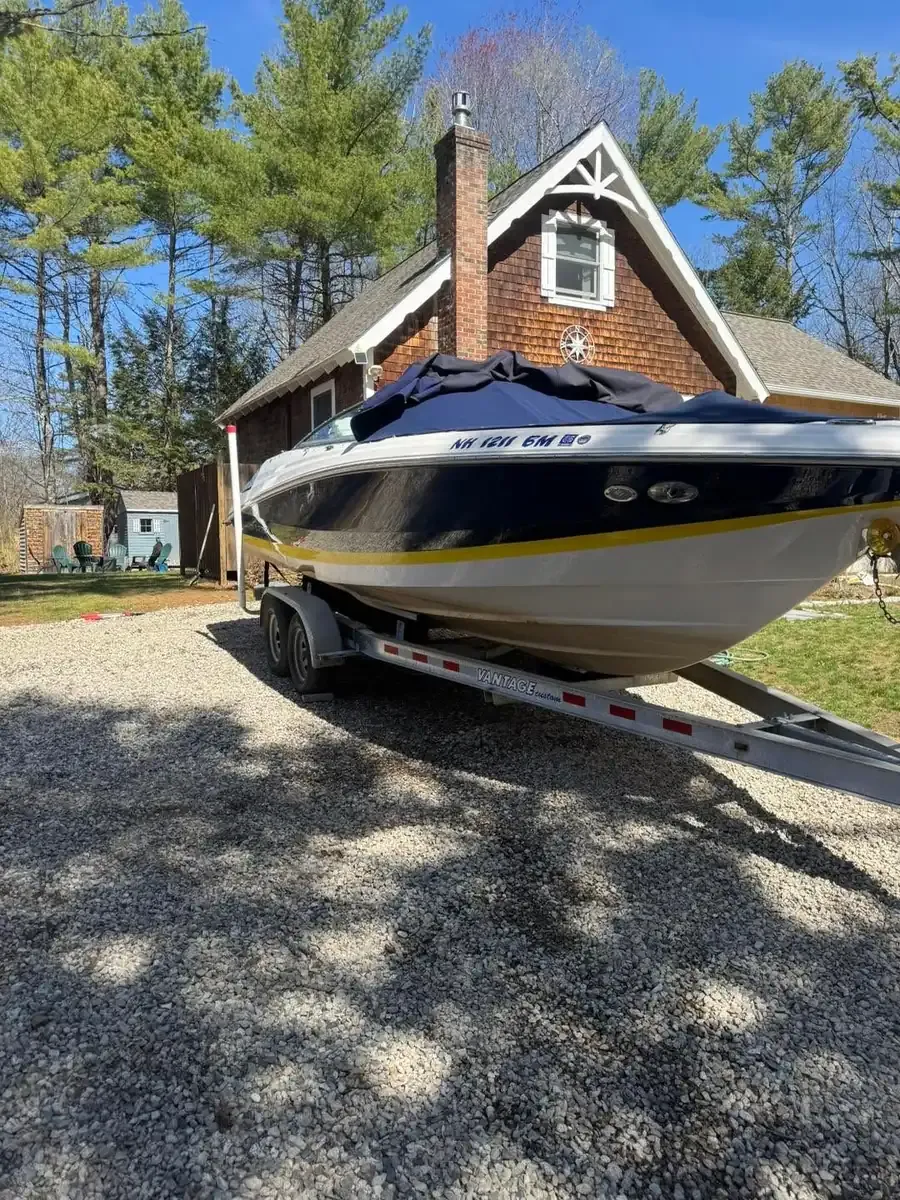
Bearings, hubs and brakes
Trailer bearings get dunked in cold lake water while they are hot, which is exactly the condition that pulls water past a seal. Repacking on a schedule, checking hubs for heat and play, and servicing surge or electric brakes are the jobs that prevent the roadside version of this conversation.
Lights, wiring and couplers
Trailer lighting lives underwater several times a season. Corroded grounds, a broken run inside a frame rail and a connector full of green are the usual suspects. Couplers, safety chains, winch straps and jacks get checked at the same time because they are the parts that matter when something else has already gone wrong.
Bunks, rollers and how the boat sits
A boat that does not sit right on its trailer wears in the wrong places, loads the hull unevenly all winter, and is harder to load single-handed at a busy ramp. Adjusting bunks and rollers is a small job with a long payoff.
Why trailer bearings fail the way they do
A trailer wheel bearing has an unusual life. It is driven at road speed until the hub is genuinely hot, then reversed straight into cold lake water. The air inside the hub contracts as it cools, and the resulting vacuum draws water past the seal. That happens on every single launch.
Which is why trailer bearings are a scheduled item rather than a fix-on-failure one, and why grease that looks milky is a finding and not a curiosity. Bearing buddies and similar pressurised caps help, but they are a mitigation rather than a cure, and the grease still has to be changed.
The failure itself is abrupt and expensive. A bearing that runs dry seizes, and a seized bearing can weld itself to the spindle or shed the wheel entirely. Checking hub temperature after a tow and wheel play before one takes seconds, and it is how a roadside failure becomes a yard job instead.