
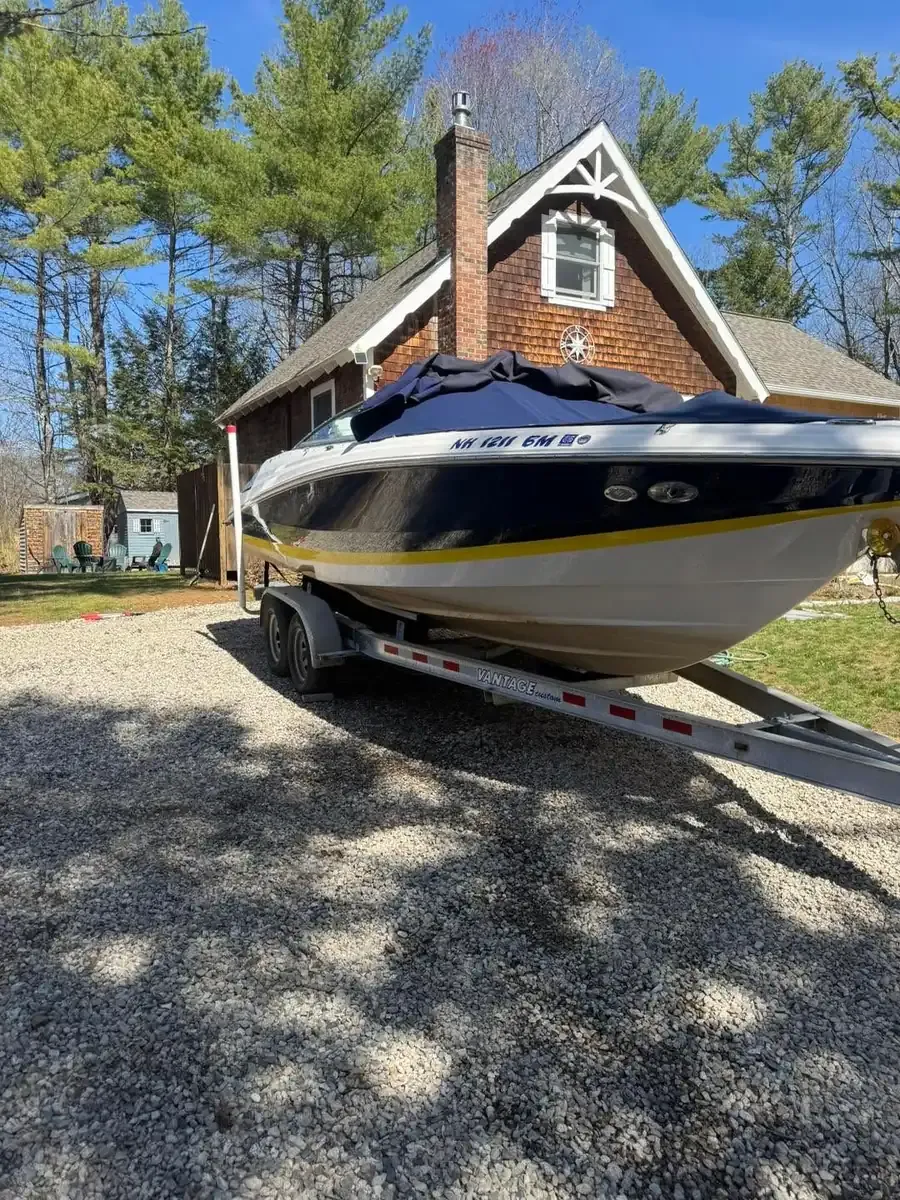
What commissioning covers
The winterization is reversed: drains closed, antifreeze flushed, fogging cleared on the first run. Batteries go back in, get load-tested rather than merely charged, and the terminals get cleaned. Belts, hoses and the impeller are inspected. Fluids are checked and topped. The engine is run up and watched, and the steering, throttle, shift, bilge pump and safety gear are all checked before the boat sees water.
Why last autumn matters in May
Most of what goes wrong in spring was set up in October. Fuel that was not stabilised, a drain that was missed, a battery left flat, gear lube that already had water in it — each of those is quiet all winter and loud at the ramp.
Booking around ice-out
The ice-out date moves every year, and the record kept since 1888 runs from 17 March 2024 at the earliest to 12 May 1888 at the latest. Booking is about the queue rather than the calendar: the work gets scheduled before the ice goes so the boat is ready when it does.
Load-testing, not just charging
The most common shortcut in spring is putting a charger on the battery, seeing twelve and a half volts and calling it good. Voltage at rest says almost nothing about a battery that has sat all winter. A sulphated battery can read perfectly and then collapse the instant a starter asks it for a few hundred amps.
A load test is the difference, and it takes minutes. It is also the check that saves the most wasted diagnosis time, because a weak battery produces symptoms that look like a dozen other faults — slow cranking, gauges behaving oddly, electronics resetting, an engine that starts on the trailer and not at the dock.
The rest of commissioning follows the same principle: confirm things under the conditions they will actually face. The engine gets run and watched rather than merely started. Steering and shift get moved through full travel. The bilge pump gets cycled. A system that has not been tested has not been checked.